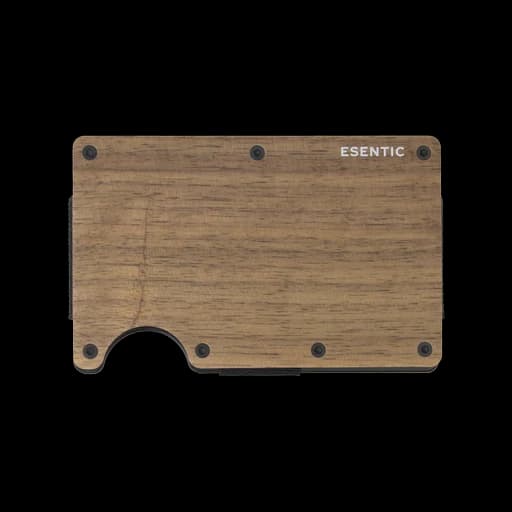
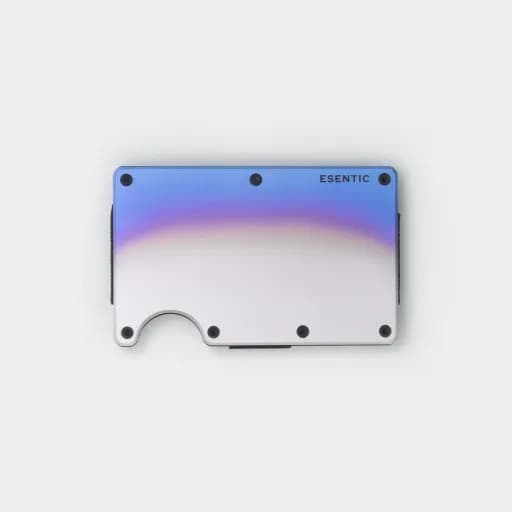



ESENTIC Wallet - Burnt steel - with clip
690.00 Kč


Colour
White, Blue
Material
Aluminium
Height
86 mm
Width
54 mm

Ten areas where the platform differs from off-the-shelf software. Beneath them, all 228 capabilities to browse or search.
Your brand deserves more than a template a thousand other stores already use. The design is built for you alone: customers remember you, pages open instantly, and search engines put you in front of them before the competition.
instant response, admin edits land right away
everything today's search engines expect, from day one
change the look whenever, the store keeps selling
phone, tablet, desktop, exactly as the customer sees it
In a box, a second brand or a second market means a second installation and double the work. Here it is one catalogue, one stock, one back office and as many storefronts as you need.
edit a product once, it holds everywhere
another name, photo, order, visibility
different name, price and photos - see what lands
entered by hand or converted automatically at the daily rate
An e-mail tool beside the store means exported lists, duplicated consent and campaigns that do not know who has already ordered. Here, campaigns and always-on sequences live where the orders are.
triggered by customer behaviour without you lifting a finger
an unsubscribe takes effect at once, everywhere
a ready-made automation you only switch on
each order is credited to the exact email that brought it
Month-end takes minutes, not evenings.
Companies buy differently: several people on one account, approvals, payment terms, agreed prices. All in one store.
the customer confirms it in one click
the order waits, no stock is reserved
credit limit, due date, reminders
two hundred lines at once
Send it a supplier's PDF, photos or a few paragraphs from an e-mail.
It returns a whole product for your approval: name, description, category, brand, parameters, variations and photos. Matched to your catalogue.
You set the rules, cap the spend and keep the last word. Descriptions, translations, photo edits and category composition take the same road.
PDF, photos or text, up to 50 products from one upload
links categories you already have, proposes missing ones and asks when unsure
Anthropic, OpenAI or Google, and the assistant spends no more
nothing is written without your confirmation
One home for sales, profit, products, customers, visitors and your own team's work. On your own data, not in someone else's tool.
Thousands of products are never managed one by one.
an import checked row by row
a whole import can be undone
feeds that rebuild themselves
bulk edits in one step
Stock numbers that match what is on the shelves: every movement recorded, every reserved piece counted, and the warehouse ordered by where things actually sit.
stock on hand minus what is already reserved
zone, aisle, rack, shelf, bin
the store keeps selling the whole time
from the permanent movement journal
What a customer orders regularly, they subscribe to. Credit, loyalty and gift cards bring them back.
each renewal creates a normal order, not just a charge
a failed attempt is retried over the following days
customers pause, skip or cancel it themselves
every top-up and every spend stays traceable
Ready-made blocks of formatted text inserted with one click, so every description reads the same.
New, Sale or any marker you invent, attached by rule and kept current automatically.
Every product in one editor: names, prices, photos, availability and where it sells, in every language and currency at once.
Everything a customer needs to decide on one page: photos, price, real availability, parameters and what belongs with it.
Several products sold as one item with its own price and page, while stock and availability follow the members.
Alternatives to a product in a single row, with a colour swatch for colours.
Sizes and colours inside one product, each sellable with its own code, price and stock, inheriting everything else live.
Draft until you say otherwise, then two switches per store: may this store sell it, and may it show it.
Add-ons and gift wrapping offered with the right products, at your price, with limits, and free above a basket value.
One curated list of units behind every numeric parameter, so cm, kg and l mean the same on every product.
Half-finished edits back themselves up as you type and come back on any computer.
Type a size range once, save it as a template, and generate every combination onto any product in one step.
Write the rule once and products file themselves into place, including the ones added later.
Alternatives, higher models and accessories link themselves by parameters. A link does not have to work both ways.
Products that are the same thing in another size or colour find each other by their parameters.
Drag a category where it belongs in the tree and the store menu rearranges with it. Page addresses, breadcrumbs and product counts follow on their own.
Every brand gets its own page, logo and story, and products can be attached to it by a rule.
Landing pages built from a combination of properties, filling themselves from the catalogue.
You assign products the same way everywhere in the admin - the conditions read as a plain sentence, and you see how many products they match before saving.
One vocabulary of properties and values reused across the whole catalogue.
A supplier PDF, photos or pasted text become a product draft, written only when you confirm.
Tick the records, switch on only the fields you mean to change, and rewrite hundreds of them in one step.
A ready-made spreadsheet built from your own catalogue with help notes and only the columns you need.
Take a whole import back within thirty days without touching records your team edited since.
Any admin list as a spreadsheet with exactly the columns you pick.
Your products as a file you can edit in Excel and upload straight back.
Your catalogue as a product file for six shopping channels, prepared for you and switched on per store.
Load or update the whole catalogue from one spreadsheet, every row checked before a single change is written.
Shortcut rows for subcategories, brands and attribute values, derived from what is actually on the page.
Decide per page which filters appear, in what order and with which sorting, with a live preview.
Every category, brand and property gets its own fast listing with a readable address, split into pages.
Author a filter and sorting setup once and stamp it onto whole category branches and brands.
A product count beside every filter option, instant even on tens of thousands of products.
Pages like /nvidia/graficke-karty/ mint themselves from the catalogue with one permanent address each.
An untranslated product can still be found: search falls back to your main language instead of returning nothing.
Products with photos, categories and brands appear under the search box while the customer is still typing.
One field that finds products, categories and brands, priced and filtered for the store the customer is in.
Misspelled, unaccented or reordered words still find the right products, on the storefront and in the back office.
What customers searched for in vain and which terms end in an order, counted per store and language.
A you may also like offer beside the basket, enabled and positioned per store.
The store learns from its own orders which products customers buy together most often and offers them on its own, recalculated daily.
Pin, boost or bury a product in a category, brand or search listing - scheduled ahead, with a preview of the effect before you save.
A list of recommended products on the home page based on what the visitor has just been viewing - no account, no cookies, no profile.
One reusable setup decides what your store suggests beside the basket and fences every other suggestion strip.
When a customer is looking at X, offer Y: cartridges for the printer they are viewing, for instance.
Recommendations by similarity you define yourself: the same colour, line, brand or a price close to the product being viewed.
The home page shows what is in demand this week, otherwise it offers the bestsellers.
Every page of the store has its own address in every language. Reserved names make sure a rename cannot break links.
Products a visitor has looked at follow them through the whole store, with nothing stored on your side.
See unsaved edits exactly as they will look in the store, on a phone, a tablet and a desktop.
A store still in preparation shows a clear notice, and a visitor who gets lost always finds the way back.
Pages are prepared in advance instead of being assembled for each visitor, and an edit in the admin refreshes them right away.
Terms, privacy policy and complaints rules written once per store and language, and published straight away.
A home page that sells from day one: blocks of categories, bestsellers and recommendations fill themselves from the catalogue.
Your logo in the browser tab, and a site the customer can add to their phone home screen like an app, under your name and icon.
A header, category menu, search, mini basket and footer that frame every page and follow your catalogue.
Titles, share previews, structured data, sitemaps and redirects for duplicate addresses, with nothing to install.
What people actually read, not what they clicked: time spent on an article, how far they get and how many finish it.
An author byline with a photo, bio and links, plus an archive of everything each one has written.
Coloured labels readers can combine to filter the blog, ordered so the ones that matter most come first.
Articles split into categories, each with its own page in the store.
Write, schedule and publish articles inside the storefront itself, in every language and on every store you choose.
One photo library behind the whole store: upload once, use anywhere, replace in a single place.
A basket that remembers itself, re-checks stock and prices on its own, and says plainly why something cannot be bought.
Contact, delivery and payment as guided sections that prefill what the store already knows.
The customer, the admin and the invoice always show the same total, down to the last cent.
One field that recognises both coupons and gift cards, plus a slider for spending store credit.
An Apple Pay or Google Pay shortcut in the basket, shown only on devices that support it.
Nobody is forced to create an account to buy, and guest orders are waiting when they do.
The order is checked once more before it is saved. The customer then sees it on screen, in an email and on its own page, which opens without signing in.
Twisto and Klarna at checkout, offered only where the store can actually offer them.
An order flips to paid within seconds and is never counted twice.
GoPay and Klarna are part of the platform, and each store can have its own account with the gateway.
Card, wallets, transfer, cash on delivery, pay later and invoice, each with its own name, fee and VAT treatment.
A payment the customer did not finish leaves the order standing, and their own order page is where they finish it.
Decide which payments go with which delivery, down to a single country, and see the result before customers do.
Zásilkovna and PPL built in: parcels register themselves, cash on delivery rides along, and delivery status comes back on its own.
The threshold above which delivery is free, and a basket that tells the customer how much is missing.
Your own branches as pickup points with opening hours, offered at checkout nearest first. The customer collects the goods directly from you.
The customer can follow the parcel themselves, and delivered orders can close on their own.
Print carrier labels one order at a time or a whole dispatch day at once, in the label size your printer takes.
Offer as many delivery options as you like, each with its own price, name and rules, and only where they truly work.
A single delivery method can have a different price, a different free-shipping threshold and a different set of payments in each country.
Weight bands with size limits, so the price follows the actual parcel instead of one flat rate.
Invoice and credit note PDFs the platform writes, sends and keeps reachable on its own, with VAT that always adds up.
An order taken by phone or email, priced exactly as in the store: at the normal price, at an agreed price or from a quote.
Every order in one list, with a view of what is waiting on you and a detail page that answers your questions without more digging.
A flow that hands the packer the oldest order, shows the shelf and lets no parcel out without a label.
Ten clear states from new to done, guarded against mistakes, moved in bulk, and advanced automatically by carrier tracking.
Every faulty-goods complaint becomes a numbered case with per-item decisions and a full history.
Money back at the prices and VAT of the original order, a credit note that reaches the customer by email, and stock that corrects itself.
A free replacement with its own number, dispatch and tracking. The related claim closes on delivery.
The customer picks how the goods travel back: a prepaid label, a code at a parcel point, your own counter, or their own postage.
Handle no-reason returns from one list, down to individual items, postage and fees, with a refund in a single click.
Customers start a return or a claim from their own account and get a case number on the spot.
The full stock list and its value for today or any past date, rebuilt from the movement journal and downloadable.
Set a minimum per item and get the reorder list written for you the moment stock crosses the line.
You know exactly which shelf every piece sits on. Moving between shelves does not change the totals, and every item has a home position.
Put a supplier delivery straight onto the shelves: a scanning field, a document number and a position on every line.
Correct a count or move stock between warehouses: you see what it will do before confirming, and a journal line stays behind afterwards.
Every product's total, reserved and genuinely available stock across all warehouses, on one screen.
A permanent journal of every movement: what, where, who did it, against which document and what stock was left.
An order claims its pieces the moment it arrives, so the last piece can only be sold once.
Count the real shelves without closing the store, several people at once, every difference reviewed before anything is written.
Storage positions with codes, types and the order in which the warehouse is walked. Generate hundreds at once.
Several warehouses from one admin: sellable stock, backup stock the store does not offer, and pickup branches.
One rule takes a percentage or an amount off a whole part of the catalogue, with no code for customers to enter.
Discount codes with their own value, expiry, usage caps, minimum order and product scope, plus figures on what each code cost and earned.
The same product can cost a different amount in each of your stores, and every page, order and invoice follows.
One rule gives a customer group a percentage discount across a whole part of the catalogue. When a base price changes, the discount follows it.
Give a customer group its own prices in one store: negotiated figures for named products, and cheaper unit prices from a quantity upwards.
A product on sale with a start and an end. The sale switches itself on and off, to the minute.
Set the VAT rate on a product once and the right figure follows it into every country, into prices and onto invoices, scheduled rate changes included.
Digital vouchers delivered by email, spendable in parts at checkout, and you can see how much is left on every card.
A percentage of every paid order comes back to the customer as credit for the next one, granted and taken back on its own.
Spend-based levels that multiply what your best customers earn, promoted the moment they qualify.
Customers invite friends with a personal link, and both sides get credit once the friend's first order sticks.
A spendable balance on the customer account: refunds, rewards and goodwill stay in the store instead of leaving it.
On schedule, every subscription creates a new order and charges the saved card, with a heads-up before the payment.
A failed card charge starts a retry ladder and honest e-mails instead of silently losing the subscriber.
One screen shows what subscriptions earn each month and which ones are failing to charge. You manage every one of them from there.
A customer picks a delivery interval on the product page, pays once by card, and walks away with a running subscription.
Pick a product, offer delivery every week or month with a discount for committing, and the storefront sells it on repeat.
Pause, skip, reschedule, change the payment card or cancel, all from the customer account with no email to support.
A ready-made automation you only switch on: an abandoned basket gets up to three reminders, the last one with a discount. The moment the customer orders, they stop.
Rule-based customer groups that maintain themselves: the biggest spenders, 90 days without an order, customers who never left a review.
Email sequences that run themselves: a welcome, a thank you or a win-back, put together in a visual editor.
Google Analytics and the Meta Pixel get the purchase data their targeting runs on. Nothing is sent before the visitor agrees.
An order that follows a marketing email is credited to that email, so you know what actually earned.
Every marketing email checks consent and the block list first. Order confirmations and other transactional messages are not affected.
Write a mailing once per language, test it on yourself, and aim it at one audience, with a checklist standing guard.
A ready-made automation that asks for a review a week after the order is completed, and only from customers who have not written one.
A sold-out product collects email addresses instead of losing visitors, and lets them know the moment it is back.
Unsubscribes, spam complaints and erasure requests become a do-not-mail list checked before a marketing mailing goes out.
Every message leaves under your own address and display name, sent through your own mailbox provider.
Adjust the wording and the look of your emails per store and language, with a live preview of exactly what arrives.
A customer can unsubscribe from any marketing email, and from stock and price watches, in a single click - no login, no email to support.
A customer can leave their email on a product and wait for a discount. When you run one, they get a notification.
Who got which email, when, why someone was skipped and what order the email brought in, on one screen.
The customer gets an email about every step of an order, every return and every change to their account, in their language and with the right documents.
Every new review is checked for profanity, contact details and spam. A clean one publishes itself, the rest wait for your decision.
The average, the spread of stars, pros and cons and the number sold, right on the product page.
One screen for everything customers wrote: approve, hide or delete with the full story of each review.
Only customers with a real fulfilled order can rate a product, so every star on your pages is backed by a purchase.
One account per business, with several people buying under it in defined roles and every negotiated term shared.
The owner of a company account invites colleagues by email and they join the same account, so one company never ends up split across several.
Type a company number and the official name, VAT ID and address fill themselves from the public register.
Wholesale mode shows visitors the whole catalogue but not a single price until they sign in.
A buyer's order waits until someone with authority in their company releases it.
Sell by the pack: a minimum, a multiple and a maximum per product, enforced from the product page to the placed order.
Companies pay after delivery within a credit limit you set, with due dates, automatic reminders and the open balance always in view.
Order by name or product code line after line, or upload a file of codes and quantities.
A customer asks for a price on their basket, you answer with an offer, and one click turns it into an order.
In wholesale mode a registration is a request: until you approve it, nobody signs in and nobody buys.
A customer group with net prices, zero-rated EU VAT behind a verified VAT ID, and a minimum order value.
One place holding the customer orders, favourites, details and credit. It grows with whatever you switch on.
Customers keep up to twenty labelled delivery addresses and pick one at checkout instead of typing it again.
Customers sign up once and keep their orders, addresses and favourites, and what they bought as guests catches up.
Sort customers into named groups that carry their prices, tax treatment and order rules.
Every customer in one searchable list, and one record with their orders, credit, group and spend at a glance.
A heart on every product, so a signed-in customer can save what they want to come back to.
Every order by year and month with its status and payment state, and one click puts a past order back in the basket.
One click instead of another password, linked to the customer account that already exists.
The moment you sign in you see what happened in the store, what earned and what is waiting on a decision, arranged around what each person actually does.
Who bought, whether they came back, what a customer is worth over their history, and when in the week your store sells.
Bestsellers, what is drawing interest, what went into baskets without selling and what comes back, down to individual variations.
Real profit from revenue and recorded costs, by day, product, category, brand and coupon. Products without a cost price are marked at a glance.
Orders and revenue by day, month and year, with a full-year view and the option to compare two periods.
A running timeline of business moments with a chart of how busy the store is.
Who did what in the back office, every save per person and per day, plus a journal of sign-ins including rejected attempts.
What visitors viewed, searched, filtered and sorted, and how many made it from a visit to an order.
Errors that would spoil a VAT return or an export are found, named and linked to the exact documents.
What a period earned, what it cost and what VAT is due, including the order that arrived a minute ago.
Invoices and credit notes for a chosen period as a single file that Pohoda, Money S3 or any software supporting ISDOC can load.
Every invoice, credit note and claim gets a unique number from a single series shared across all your stores.
Every invoice and credit note also exists as an ISDOC electronic invoice, for your accounting and for customers, once you enable it.
The right country's VAT on every EU sale, a watch on the EUR 10,000 threshold, and the quarterly OSS return.
Supplier invoices recorded in seconds: drop in an ISDOC e-invoice and the whole form fills itself.
Your company identity, tax country, reporting currency and VAT status, set once and applied everywhere.
Output VAT, input VAT and corrections assembled line by line as the return expects, with files the MOJE dane portal accepts.
The store is created in the admin in minutes; the site itself is prepared by our team from one prepared command.
Every store has its own address, design and pages. The catalogue, stock and orders are shared, but what each store actually sells is up to you.
One product, category or brand can carry a different name, photo, order and visibility in each store without being duplicated.
Reviews, credit, subscriptions, quick order and a dozen other capabilities switched on or off store by store.
One screen per store holds its identity, languages, currencies, shipping, payments and legal texts.
Every store scored against nineteen plain-language checks, with each problem carrying a link to the place where it is fixed.
Switch automatic rates on and fresh values arrive every day, filling in prices everywhere you have not set one by hand. A hand-typed number is left alone.
Translate a product, a category or a brand right in its own form. You see which languages are still missing, and the AI assistant can draft the first version.
Every country you sell to, with its own name in every language, its own tax rates and its own place in your checkout.
Clean, readable addresses in every language, built from the names and guaranteed unique across the whole store.
Real prices in every currency you offer, typed by hand where it matters, filled in for you everywhere else.
Sell in Czech today and German tomorrow: one catalogue, every language a customer can switch to in the header.
Hand a translation to an agency and they can change nothing but the language fields. The limit holds at save time, not only in the interface.
Ctrl+K anywhere in the back office finds the screen, product, order, category or brand you are thinking of.
Every team member sets how the admin looks and which language they want it in.
Every sign-in attempt is logged with its address and browser, repeated password guessing is blocked, and one password change signs the account out everywhere.
Every colleague gets their own account, sees only what their job needs, and loses access the moment you say so.
Slow work moves to a tray in the header with live progress; you keep working and collect the result when it is ready.
Every save recorded field by field with who and when, and any version brought back with one click.
Hand a task to a colleague in the admin with a deadline, a priority and a checklist. They see it the moment they sign in.
A realistic practice catalogue and orders to experiment with freely. When you are done, you delete exactly what was generated and nothing else.
One click turns the full admin menu into a warehouse view, a marketing view or an accountant's view, without touching anyone's rights.
Per-store keys with named permissions, a secret shown exactly once, usage counters, zero-downtime rotation and one-click revocation.
Your own name and value pairs on categories and badges, read by your bespoke storefront.
Orders are reported to Heureka's satisfaction questionnaire when the customer ticks the consent box at checkout.
Marketplace orders reach your list exactly once. Heureka is handled natively, anything else through your own connector, and order states are sent back.
Other systems read your products, stock, orders and customers, and write back order states and stock counts, through one documented interface.
Your systems learn about orders, payments, stock and catalogue changes seconds after they happen. Every call is signed, retried on failure and recorded.
Connect the AI account you already pay for, choose the models, and decide where the assistant may appear.
A monthly ceiling the assistant cannot spend past, and a clear answer on what it cost you.
A one-paragraph brief becomes a whole category branch with filing rules, created when you confirm.
Larger AI drafts wait for your review, revisable with comments, and written only when you confirm.
Your house rules, written once and carried into every request the assistant makes.
Parameters, values and groups proposed for a product type, reusing what you already have, created only when you confirm.
Background removal and clean product shots in one click, saved as new versions; no retouch ever overwrites the original.
One button checks the market and returns a suggested price, a range, competitor links and how sure it is.
Selling copy written live from the product's own data, in your tone and length, separately for every language.
The missing languages of a product or category filled in one step, field by field, for your review before saving.
A category-level cookie bar that keeps every tracker off until the visitor says yes, and records the choice as proof.
Every export and erasure request on one screen, sorted by the statutory 30-day clock, with approval in two clicks.
The right to be forgotten, run across every area of the store at once, while invoices and accounting keep every number.
A customer downloads everything the store holds about them, assembled from twelve areas with no work on your side.
A full copy of the platform data every night. If anything goes wrong, the store can go back to the last backup.
A separate app shows the health, speed, uptime and logs of every part of the platform, and warns you about trouble before customers notice it.
Every change passes automated checks from end to end, and the new version goes live without dropping a single request.
Passwords stored so they cannot be recovered, encrypted credentials for carriers and payment gateways, protection against request floods, and a record of who did what.
Six guided steps from a registration key to a working store: the admin account, taxes, countries, currency, language and the store itself.
Spare serving capacity, prepared pages and fenced-off background work keep the storefront at full speed on its busiest day.
Built-in integrations, no plugins. You enter your own credentials in the admin.
This list describes the platform as it works today. And because the platform is ours, anything else can be built to fit your business exactly.
Anything missing from the list we build to order. The scope and the price are agreed up front, by the team that runs your platform.
Describe what you need